Hollywood’s Perception Of Hollywood
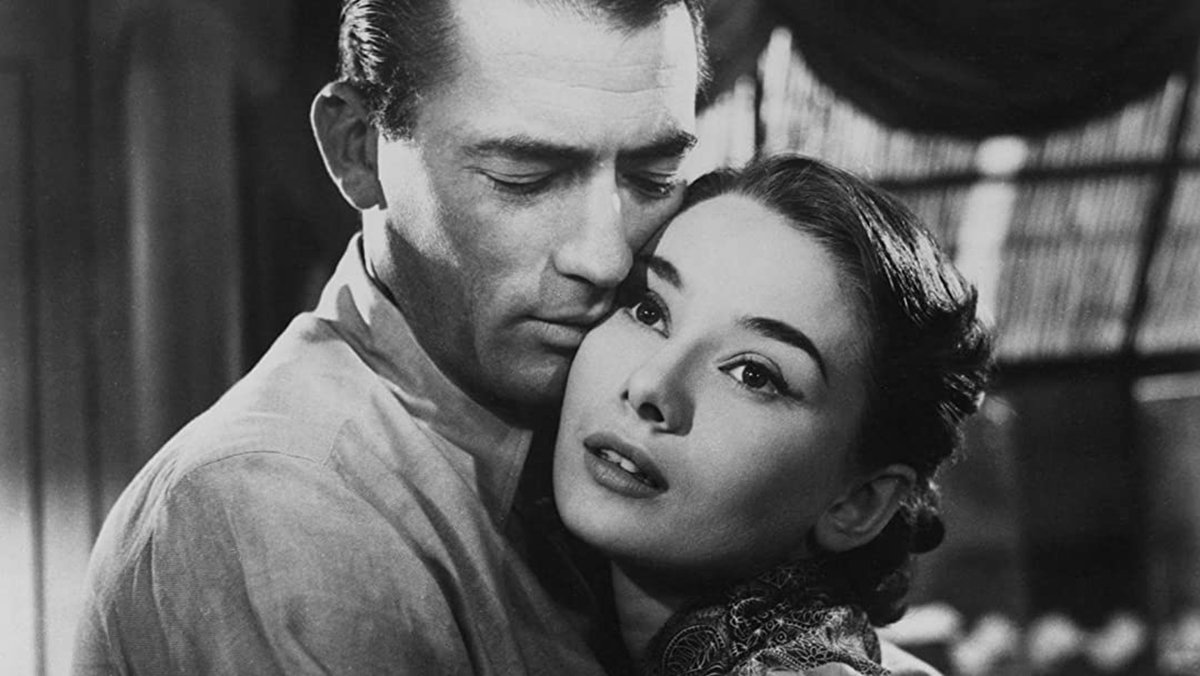
Marilyn Monroe once said, “Hollywood is a place where they’ll pay you a thousand dollars for a kiss and fifty cents for your soul.” But despite its amoral, backstabbing, and phony reputation, Tinseltown has remained a fascinating place where many people dream of meeting or becoming a star. For more than a century, Hollywood has created and debunked many myths about itself as a main subject – some based on truth – beginning with the early days of cinema.
During the Silent Film Era, just as the “HollywoodLand” sign was erected, some films immediately recognised the movie industry’s shallow appeal. The aptly titled Hollywood (1923) featured cameos by many silent film stars, including Charlie Chaplin, Gloria Swanson, and “Fatty” Arbuckle, as a small town star struck girl named Angela who dreams of being a Hollywood actress; Doors are slammed in her face but her wacky family is inadvertently cast in movies by the studio because they are deemed “character types.” In that same year, other films, such as The Extra Girl and Souls for Sale, shared the same superficial Hollywood star dream premise.
With the advent of sound and set in of The Great Depression, the Classic Hollywood Cinema Era produced comedies to lift audiences’ spirits which followed the same ‘making it in Hollywood’ theme: Free and Easy (1930) starred Buster Keaton and Movie Crazy (1932) featured another silent era comedian Harold Lloyd; Something to Sing About (1937) showcased James Cagney as a vivacious bandleader who defies ruthless Hollywood producers by feigning his private life; and Stand-In (1937) starred Humphrey Bogart and Leslie (their last pairing), which depicted movie studios as corrupt and talentless individuals who take advantage of labor unions.
As women became a more formidable force in Hollywood, films began to focus more on the mistreatment and pressure that actresses faced. Bombshell (1933) starred the striking Jean Harlow as an actress who selflessly gave handouts to her unappreciative family while dealing with devious studio heads. In What Price Hollywood? (1932) Constance Bennett is an aspiring starlet befriended by a drunken Hollywood producer, a premise that exposed the rampant alcoholism widely associated with Hollywood types. The film also served as a predecessor to the original A Star Is Born (1937) starring Janet Gaynor. Her character dreams of stardom but achieves success only with the help of washed up, veteran actor Norman Maine (played byFredric March). Hollywood’s allure is well crafted along with the emptiness that befalls artists in a town where trust is too often a lonely word. In one scene, Norman asks a press agent, “What do they do with the actors while you’re away?” He answers, “Oh, they cut ’em into slices and fry ’em with eggs.”
Just months before America entered the Second World War, Hollywood continued to make escapist entertainment. Preston Sturges’s Sullivan’s Travels (1941) starred Joel McCrea in the title role as a naive director of fluff films who decides to make a film about the impoverished. Along the way, he is put in his place by a sexy vixen played by Veronica Lake. She tells him, “Just think, if you were some big shot like a casting director or something, I’d be staring into your bridgework saying, ‘Yes, Mr. Smearcase. No, Mr. Smearcase. Oh, Mr. Smearcase, that’s my knee!” In another scene, the naively, moralistic Sullivan quibbles with garish studio boss Mr. Lebrand:
Sullivan: I want this picture to be a commentary on modern conditions. Stark realism. The problems that confront the average man!
LeBrand: But with a little sex in it.
Sullivan: A little, but I don’t want to stress it. I want this picture to be a document. I want to hold a mirror up to life. I want this to be a picture of dignity! A true canvas of the suffering of humanity!
LeBrand: But with a little sex in it.
Sullivan: [reluctantly] With a little sex in it.
Arguably the most popular take on Hollywood, Billy Wilder’s Sunset Blvd. (1950) sees the return of the legendary actress Gloria Swanson, who portrays aged silent film star, Norma Desmond. The film also costars silent film director Erich von Stroheim and features a cameo by Buster Keaton. In one scene, Norma asks the destitute screenwriter, Joe Gillis (played by William Holden), “And you have written pictures, haven’t you?” This line questions whether the written word in motion pictures is valued more than acting talent. A struggle between the Old and New Hollywood exists where beautiful images are as superficial as Joe feels about writing hack stories to make lots of money for the studios. Thus, the film communicates that Hollywood no longer has a place for middle-aged talent and little interest in creating quality art.
In that same year, All About Eve also portrayed an ageing, hard-edged actress (Bette Davis in a tour de force performance) who must use her charming personality to prove her worth in a system that values youth and beauty (Marilyn Monroe appears in several scenes). Anne Baxter in the title role resorts to wily manipulation in an attempt to steal her idol’s thunder. The film is a classic story of ambition and betrayal that shows how the women in Hollywood must go to great lengths to secure their “star” status. Director Joseph Mankiewicz’s screenplay is brilliant, which includes Davis’s legendary drunken line, “Fasten your seat-belts, it’s going to be a bumpy night!”
Overall, the 1950s was a more critical and bitter outlook on Hollywood’s greed and power. In 1952, Davis returned as another ageing actress in The Star who desperately tries for a comeback but is mercilessly shunned by Hollywood. In that same year, The Bad and the Beautiful starred Kirk Douglas as a tough, ambitious producer who clashes with everyone in Hollywood and heartlessly uses movie star Georgia Lorrison (played by Lana Turner). The film cleverly shows the realistic miscasting of actors caught amid a conflict in production between a producer’s commercial drive and a director’s artistic one.
A few months later, the iconic Singin’ In The Rain (directed by Stanley Donen and choreographed by Gene Kelly) gave us Debbie Reynolds as Kathy Selden, a voice double hired by the studio to dub silent film star Lina Lamont (played by Jean Hagen). Interestingly enough, Elizabeth Noyes Hand actually dubbed the singing voice of Reynolds (dubbing Lamont), and in one scene where Kathy is supposedly dubbing Lina’s dialogue (“Our love will last ‘til the stars turn cold …”), Hagen’s real voice was used. When Selden actually replaces Lamont, we learn that anyone in Hollywood can be tossed out to the wind like yesterday’s news – contract or no contract.
In 1954, a string of films reflected the theme of a small town girl meeting an alcoholic Hollywood man promising to make them stars: the darker remake of George Cukor’s A Star Is Born starring Judy Garland andJames Mason; The same year we also got The Country Girl featuring Grace Kelly and William Holden; and Mankiewicz’s The Barefoot Contessa with Humphrey Bogart and Ava Gardner.
By the late 1960s, heavy censorship fell with the lifting of The Hays Code, Production Code of the Motion Picture Industry, and McCarthyism. As a result, The New Hollywood Era allowed for a more provocative depiction of Hollywood. Inside Daisy Clover (1965) starred Natalie Wood as a tomboy actress so badly abused by the movie industry that she has an ill-fated nervous breakdown. James Ivory’s raunchy The Wild Party (1975) openly stylised 1930s HollywoodLand parties depicting wild sex, drugs, and booze, which was loosely based on the infamous “Fatty” Arbuckle murder scandal of a young starlet named Virginia Rappe (mirrored by Raquel Welch). In that same year, John Schlesinger’s The Day of the Locust featured Karen Black as a shunned 1930s actress who must contend with an alcoholic father and a system of bloodsucking, heartless Hollywood producers. During this period, European films also took jabs at Hollywood, includingFellini’s 8 ½ (1963) and Truffaut’s Oscar-winning Day For Night (1973).
Finally, the Contemporary Period of cinema today has continued to define Hollywood in interesting ways.Robert Zemeckis’s Who Framed Roger Rabbit? (1988), although a live-action/animated film, satirised Hollywood clichés and exposed the seedy side of Tinseltown with the title character literally (and metaphorically) engineered by a studio owner whose sole interest is making money. The sexy femme fatale cartoon character, Jessica Rabbit (voiced by Kathleen Turner), explained her own magnetism: “I’m not bad. I’m just drawn that way.”
In Christopher Guest’s The Big Picture (1989) Kevin Bacon plays a student whose ‘short’ gains attention in Hollywood. However, he must make harsh concessions with the studios that decimate his original screenplay for guaranteed profits. At one point, a cut-throat agent (played by Martin Short) says, “If you decide to sign with me, you’re gonna get more than an agent. You’re gonna get three people … an agent, a mother, a father, a shoulder to cry on, someone who knows this business inside and out. And if anyone ever tries to cross you, I’ll grab them by the balls and squeeze ’til they’re dead.”
In 1990, Mike Nichols’s Postcards From The Edge, written by actress Carrie Fisher, was a telltale about her relationship with her mother, screen legend Debbie Reynolds. The film depicts alcoholism, drug abuse, and the sheer pressure associated with being a star as the two are driven crazy by schmoozy Hollywood types offering “helpful” advice. One year later, the Coen Brothers’ Barton Fink revealed an even bleaker view of Hollywood. The title character (played by John Turturro) is a young New York playwright hired by a crass studio producer who throws lots of money at him to write a B-grade wrestling movie. However, Fink contemplates between remaining true to his art and selling out to the venal Hollywood industry. In one entertaining scene, Fink meets his mentor screenwriter whom he discovers is an alcoholic and has had his secretary write most of his work.
Following this film is Robert Altman’s masterpiece The Player (1992), which exposes the inhuman behaviour of studio execs obsessed with producing pristine ‘Hollywood endings’ that will generate the most for their dollar. The creative process of making a movie is empowered by producers who are less interested in art but rather how a (flashy) film is marketed. At one point, producer Griffin Mill (played by Tim Robbins), says: “I was just thinking what an interesting concept it is to eliminate the writer from the artistic process. If we could just get rid of these actors and directors, maybe we’ve got something here.”
Similarly, in that same year, Mistress depicts a struggling screenwriter (played by Robert Wuhl) who unknowingly sells his soul to financial backers (featuring Robert DeNiro, Danny Aiello, and Eli Wallach) as his film becomes horrifically altered to fit their conception of what will sell to the masses.
In 1994, the underrated gem, Swimming With Sharks, very convincingly depicts the “networking” required to ‘make it in the business.’ Kevin Spacey plays as an abusive, self-indulgent, and arrogant vice president of production who humiliates and torments his young, subservient assistant (played by Frank Whaley). His morning greetings usually begin with, “Shut up! Listen! Learn!” and he is taught, “If they can’t start a meeting without you, that’s the only kind of meeting worth going to.” The assistant puts up with this beratement because perhaps one day he, too, will be a vice president in charge of lying and executing movie power.
More lighter in tone, Get Shorty (1995) stars John Travolta as a mafia hitman crazy about the movies. He pitches a story to a sleazy producer (played by Gene Hackman) about his life of organised crime that mirrors Hollywood: glamour, glitter, fear, seduction, brutal competition, and intimidation. In one scene, Travolta even gives the title character’s A-list actor (played by Danny DeVito) acting lessons in how to look menacing.
A different take is Peter Weir’s The Truman Show (1998) in which screenwriter Andrew Nichols depicts Hollywood’s disregard for privacy. Ed Harris plays a callous Hollywood producer who creates a unique program for today’s reality-show-obsessed society where its star (played by Jim Carrey) is unknowingly filmed 24-hours-a-day. When the producer tells his crew to “cue the sun,” we question our own world highly dependent on technology and entertainment. In that same year, both Welcome to Hollywood (1998) and Woody Allen’s Celebrity (1998) play like mockumentaries with many celebrity cameos taking us behind the scenes of Hollywood players that use one another as stepping stones to fame without shame.
More realistically, David Mamet’s underrated State And Main (2000) depicts how a small Hollywood film crew operates while shooting a movie in a quaint American town. William H. Macy‘s producer Walt Price struggles to keep his main star (Alec Baldwin) from chasing girls’ skirts while trying to get his other star (Sarah Jessica Parker) to take off hers for their motion picture. In one scene Philip Seymour Hoffman‘s screenwriter asks, “What’s an associate producer credit?” and an employee answers, “It’s what you give to your secretary instead of a raise.”
Conversely, Woody Allen’s Hollywood Ending (2002) shows what happens behind the scenes of a big budget movie when the director, Val Waxman, (Allen) is in constant disagreement with the studio. Waxman endures so much stress over creative differences and going over budget that he goes temporarily blind. While his motion picture bombs at the box office for being “too artsy,” it winds up a big hit in Europe.
More recently, Barry Levinson’s What Just Happened (2008) shows a Hollywood producer (played byRobert DeNiro) negotiating with studio heads so that his film can enter the Cannes Film Festival. He says,“Vanity Fair named me as one of the 30 most powerful producers in the business. Power is an elusive term, but in Hollywood it’s everything. I don’t care what they say; you either have it, want it, or you’re afraid of losing it.”
Just last year, Ben Affleck’s Academy Award-winning Argo was based on true events. In 1980, a CIA agent (Affleck) created a fake Hollywood motion picture in order to fool Iranian terrorists into permitting his ‘film crew’ (diplomatic hostages) to exit the country. In one scene, “Producer” Lester Siegel (Alan Arkin) tells the crew,“It’s got horses in it, it’s a Western,” and in another he quips, “You’re worried about the Ayatollah? Try the WGA [Writer’s Guild of America].”
Sadly, earlier in the year, renowned film critic Roger Ebert passed away. He once said, “If a movie isn’t a hit right out of the gate, they drop it. Which means that the whole mainstream Hollywood product has been skewed toward violence and vulgar teen comedy.” Only time will tell as Hollywood continues to depict its own complex perception of itself.
