Le Samouraï
★★★★★
Dir: Jean Pierre Melville
(1967)
Jean Pierre Melville's Le Samouraï lives between its chiming major notes. A quietly burning masterpiece of suspense rooted in early American noir and filtered through the early days of French cinema cool, its brilliance as a twisting of a popular theme and as a corner-stone of square-jawed silent style, it remains a flawless experience. It's also notable for having miraculously missed out on the plaudits it rightly deserves. In a world where Quentin Tarantino can revive lost and obscure Italian cult film and violent 80's cop dramas with a wave of his hand, Le Samouraï, although it has been referenced and redrawn by some serious auteurs of in the 21st century, is a wonderfully striking film and an unknown entity for your average film goer.
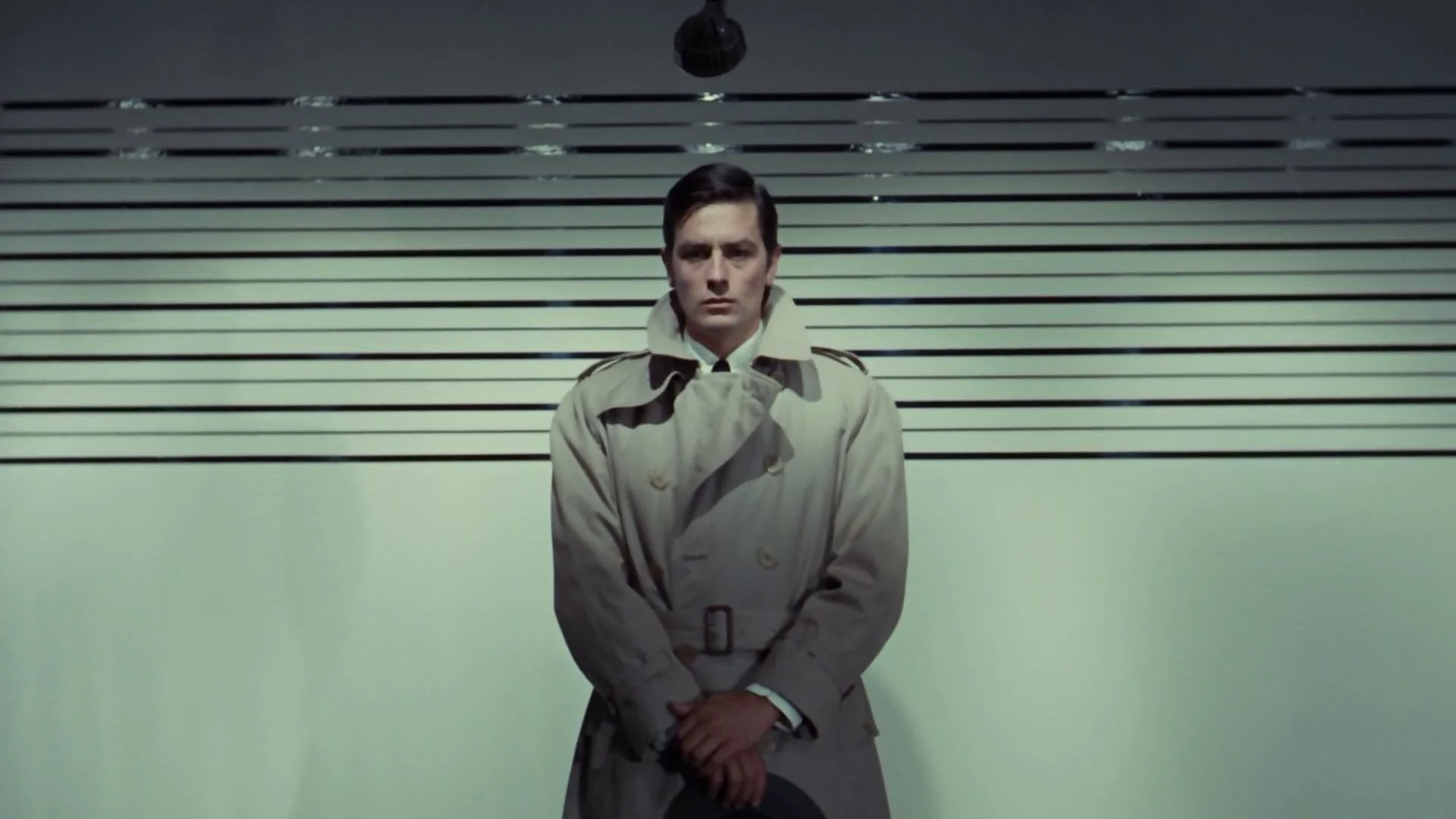
Spending the first 3 minutes waiting for Alain Delon to finish a cigarette in his bare room, accompanied only by a bird in a cage may not be the perfect attention grabber selling a breathless thriller but what becomes apparent immediately is that Melville's intention instead is to attach a restless feeling to the most simple of images and sequences. He rises, dresses in the coolest hat to ever grace the screen and heads outside to steal a car, get the plates changed and buy a gun. 10 minutes of dialogue-less movement and Le Samouraï will have you pinned.
Delon is Jeff, a hitman who gets himself wound up in a bit of a mess after he is recognised at the scene of a crime. Wanted by the cops and his shady employers he must avoid them both by saying very little. Cold and enigmatic he moves from shadow to shadow imparting most of his words in a planned alibi to his lover which will either pardon him or hang him. As far as plots go its wafer thin, relying instead on a sense of moral tension between its few characters, chase sequences and cool exchanges in bedrooms and police interrogation rooms.
Jarmusch's Ghost Dog, Walter Hill's The Driver, John Woo's The Killer and Nicolas Winding Refn's Drive have all borrowed heavily from the film's whispering style and especially from Delon's steely eyed anti-hero. Melville knew, like most masters of atmosphere that the tightest sequences in film must come from the views own anticipation of the approaching action and not the action itself, a technique which he showed brilliantly in Le Samouraï and would perfect in Le Cercle Rouge's 25 minute silent heist sequence. If you have already seen Le Samouraï watch it again and if you haven't; sit back in the cool grey light of it all and enjoy a thriller which lives on anonymously in every chase film made since.
